
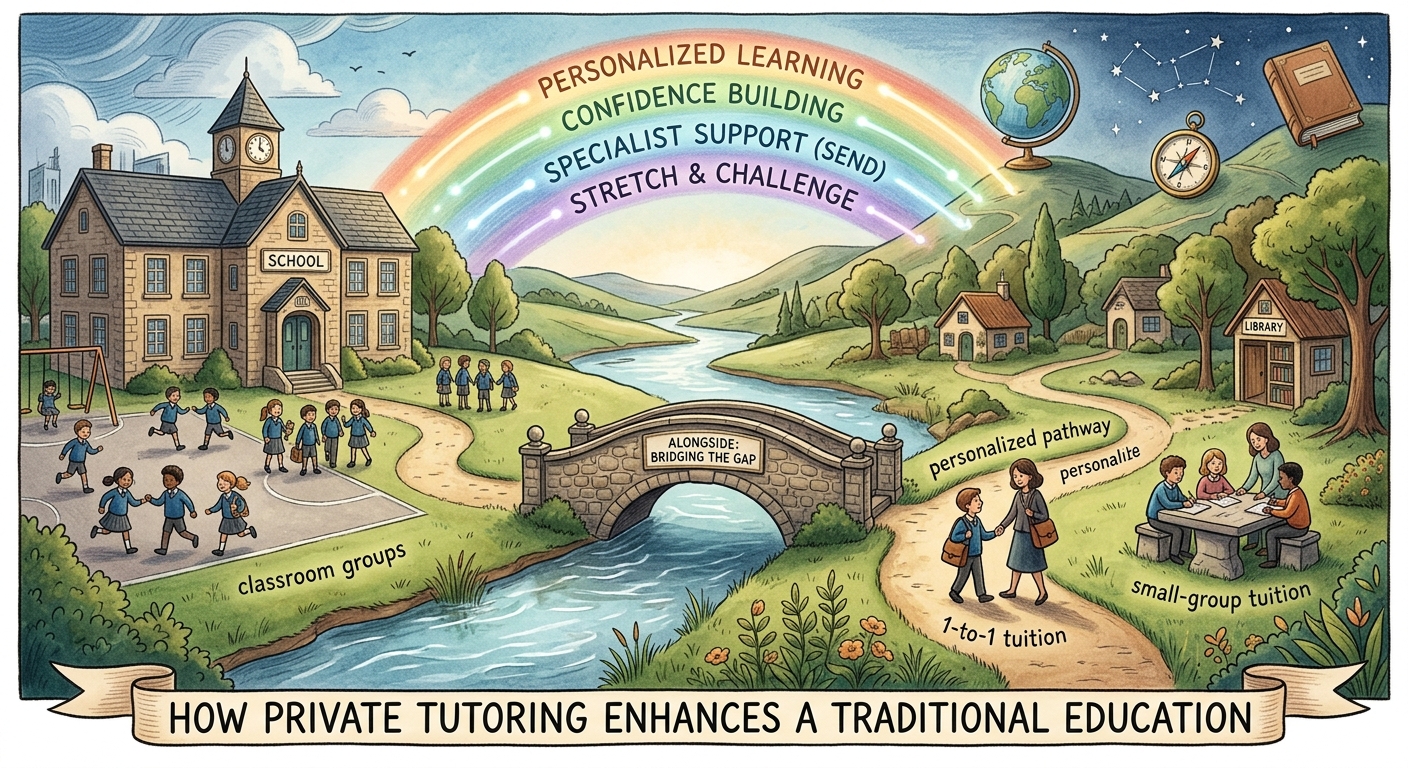
For most parents, the question isn’t “school or tutoring”, it’s how the two can work together. Private tutoring in the UK isn’t a sign that something has gone wrong at school. It’s a way of giving a child something a classroom, however good, was never designed to provide: focused, individual attention.
Here’s what the evidence actually shows, and how it plays out for families navigating mainstream school alongside the additional support marketplace.
State school class sizes in England remain stubbornly large. The latest Department for Education figures show average Reception and KS1 classes sitting at around 26 pupils, key stage 2 classes averaging close to 28, and secondary classes averaging around 22. Even an excellent teacher is dividing their attention 20-something ways during any given lesson.
That’s not a criticism of teachers, it’s simply what the ratio allows for. A tutor working with one child, or a small group of two to five, can move at the child’s pace: slowing down on a concept that hasn’t landed, or moving faster through material a child has already mastered. Neither is really possible in a class of 25.
This isn’t just intuition. The Education Endowment Foundation (EEF), the body the UK government and schools rely on for evidence-based guidance on what actually improves outcomes, rates one-to-one tuition as high impact for moderate cost, based on evidence gathered in over 120 studies. On average, pupils receiving one-to-one tuition make around five additional months’ progress compared with similar pupils who don’t.
Small-group tuition (two to five pupils) shows a similar pattern of benefit at a lower cost, which is part of why many tutoring relationships, and the National Tutoring Programme itself, increasingly use small groups as a starting point before moving to fully individual sessions.
It’s worth being precise about what this evidence does and doesn’t say. The EEF rates the underlying evidence as “moderate” in strength, and impact varies considerably between studies depending on how the tuition is delivered, by whom, and how well it’s matched to the pupil’s actual gaps. Tutoring isn’t a guarantee, it’s a tool that, used well, tends to work.
The “falling behind” context does private tutoring a disservice. For a lot of families, tutoring isn’t remedial, it’s about the following:
- Building confidence in a subject a child has quietly decided they’re “bad at,” often well before there’s any measurable attainment gap
- Stretching a child who’s coasting in a subject they find easy at school but could go further in
- Bridging specific transitions, moving from KS2 to KS3, prepping for the 11+, or settling into a new exam board
- Providing consistency a busy classroom schedule can’t always offer, especially around exam periods
None of this requires a child to be “behind.” A confident, capable child can still benefit from someone whose only job, for an hour, is to focus entirely on them.
Tutoring alongside SEND and specialist support is where the school-and-tutoring relationship becomes especially important rather than optional. Department for Education data (via the House of Commons Library) shows that as of January 2025, nearly one in five pupils in England (19.6%) has identified special educational needs, with around 14.2% receiving SEN Support and 5.3% holding an Education, Health and Care (EHC) plan. Speech, language and communication needs and social, emotional and mental health needs are among the fastest-growing categories.
Schools, particularly under current funding pressure, often cannot provide the intensity of one-to-one input a child with SEND may benefit from, even when needs are well identified. This is where SEND-specialist tutors, occupational therapists, and speech and language therapists working alongside the school, not instead of it, make a tangible difference. A child seeing a specialist for an hour a week, in addition to their school’s SEN Support provision, is getting a level of individualised attention the school day structurally cannot replicate at scale.
The key word is alongside. The most effective set-ups we see are ones where tutors and specialists know what the school is working on, and the school is aware of and supportive of the additional input, not a parallel, disconnected stream of help.
You may wonder what actually makes tutoring work, what is the right fit for my child? Naturally qualifications matter, but they’re not the whole story. The relationship between a child and their tutor, whether the child feels safe getting things wrong in front of them, whether the tutor’s pace and personality suit how that particular child learns, tends to be what determines whether tutoring sticks or fizzles out after three sessions.
This is a genuinely qualitative factor; there’s no robust statistic to attach to it, but it’s consistently the thing tutors, parents, and SEN professionals point to when asked what separates a tutoring relationship that works from one that doesn’t.
A quick practical checklist of signs that highlight you child might benefit from tutoring:
- They’re avoiding a particular subject, or homework time around it causes outsized stress
- Their confidence in a subject seems lower than their actual ability
- They’re transitioning between key stages, schools, or exam boards
- They have an identified SEN need where the school’s support, however well-intentioned, can’t offer the input frequency a specialist could
- They’re capable of more than the curriculum pace currently allows
If any of this sounds familiar, the next step isn’t to panic, it’s to find the right person, not just any tutor. A short trial session is usually more informative than a CV.
References
- Education Endowment Foundation, Teaching and Learning Toolkit: One to One Tuition — educationendowmentfoundation.org.uk
- Education Endowment Foundation, Teaching and Learning Toolkit: Small Group Tuition — educationendowmentfoundation.org.uk
- Department for Education, Schools, pupils and their characteristics: 2024/25, via Explore Education Statistics — explore-education-statistics.service.gov.uk
- House of Commons Library, Special Educational Needs: support in England (updated with 2024–25 data) — commonslibrary.parliament.uk
Note: UK class size and SEND figures are drawn from the most recent published DfE data at the time of writing (academic year 2024/25 census, January 2025) and are subject to annual revision.
Blog
This section offers a summary of the blog, presenting a range of articles, perspectives, and materials to educate and motivate readers.
-
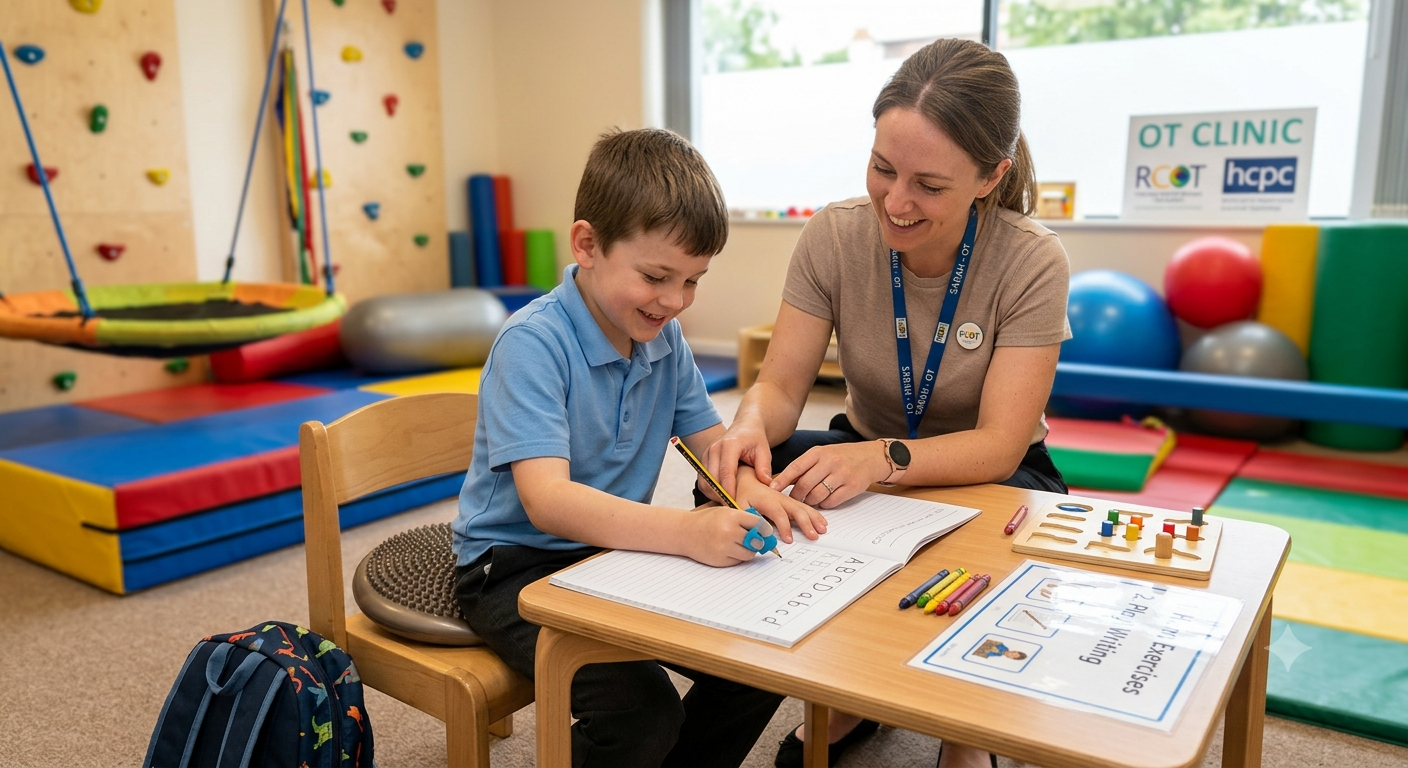
More Than Just Tutoring: Is Occupational Therapy the Missing Piece in Your Child’s Learning?
If you have spent any time researching how to support your child through Key Stages 1, 2, or 3, you have likely come across the term Occupational Therapy (OT). While traditionally associated with physical rehabilitation or adult healthcare, OT is increasingly being recognised by…

-
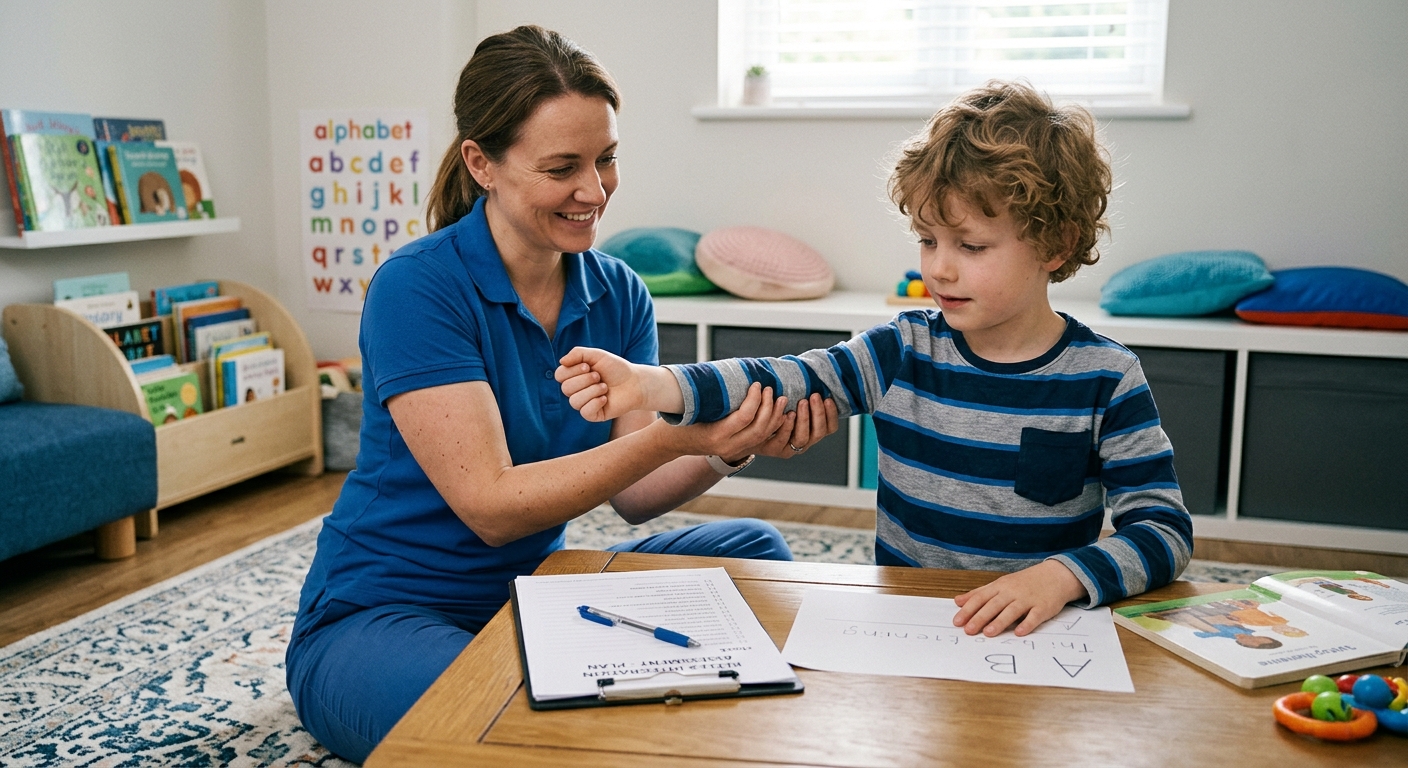
Retained Reflexes and Learning
If your child struggles with handwriting, can’t seem to sit still, or finds reading harder than you’d expect for their age, you may have come across the term “retained primitive reflexes.” It’s a topic that generates a lot of interest among parents and…